Why Is a Standard Workbench Not Always Sufficient in Workshops?
Every workshop has a different type of work, equipment, and working habit 🙂 The needs of an electronics assembly workshop are not the same as those of a facility carrying out heavy mechanical maintenance. At a point where sensitive measurement and quality control are performed, a vibration-free, clean, well-lit surface with properly positioned equipment is required; while in an area where welding, grinding, mold maintenance, or heavy assembly is carried out, a thick frame, high load capacity, impact-resistant surface, and strong connection structure become more critical. For this reason, a standard workbench produced in fixed dimensions may be sufficient in some areas, but in workshops with intensive and specialized workflows, real efficiency is generally achieved through designs customized according to the task.
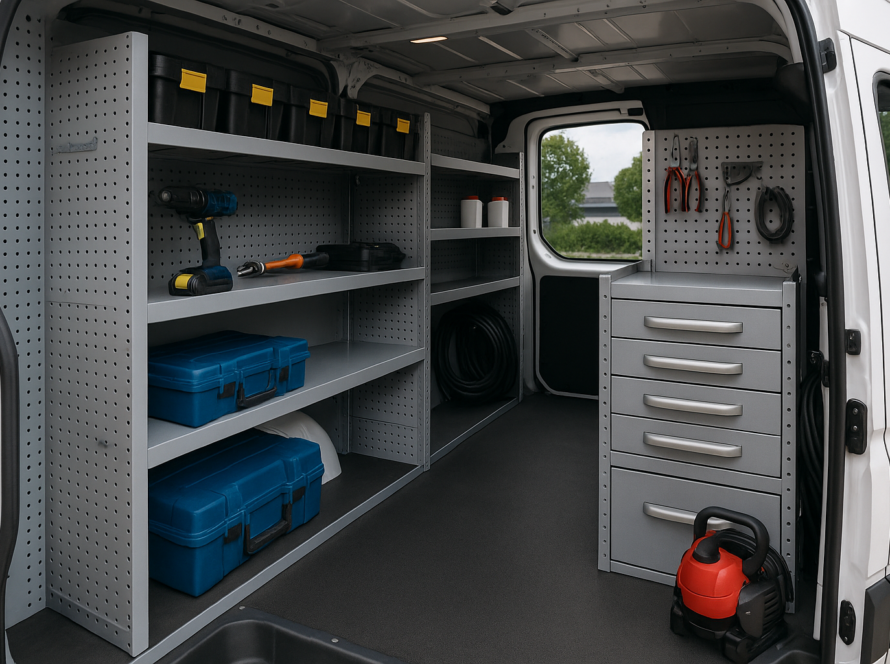
When workbenches are examined, it can be seen that models with drawers, cabinets, perforated panel accessories, or completely project-specific structures can be developed. This approach is extremely valuable because it makes it possible to customize not only the dimensions of the bench, but also the way work is performed. For example, for an operator working on an assembly line, a flow can be established where parts enter from the right and leave from the left; in a maintenance workshop, frequently used hand tools can be moved to a perforated panel at eye level; sensitive devices can be placed in lockable cabinets; and heavy tool sets can be positioned in lower drawers. In this way, a Detay Endüstri workbench becomes not merely a product, but the physical expression of a specific workstation.
The First Step in Custom Workbench Design: Work Analysis
Workbench design should begin not by determining dimensions, but by carrying out a work analysis 🙌 Questions such as which operations will be performed on the bench, which tools will be needed during the process, what the weight of the product will be, whether the work will be carried out while standing or sitting, how many times the operator will pick up and put down materials during the day, whether electrical or pneumatic equipment will be used, and whether there will be contact with oil, chemicals, chips, or hot parts form the foundation of the design. A workbench selected without answering these questions may appear physically strong but still remain insufficient within the real workflow.
For example, in a maintenance workshop where small engines are disassembled and assembled, oil and impact resistance are just as important as the carrying capacity of the work surface. In an electronics repair area, antistatic surfaces, good lighting, cable passages, and small-part drawers become more valuable. In a mold shop, a heavy-duty frame and an approach area suitable for lifting equipment are required. In a packaging area, it is more appropriate to plan the bench together with access to racks, boxes, and consumables. That is why custom workbench models for mold shops and a precision assembly bench should not be handled with the same design logic.
Main Solution Families in Custom-Designed Workbenches
| Workbench System | Main Feature | Advantage Provided | Suitable Area of Use |
|---|---|---|---|
| Heavy-Duty Fixed Workbench | Reinforced steel frame and durable surface | Resistance to high static and dynamic loads | Mechanical maintenance, mold work, engines, and heavy assembly |
| Workbench with Drawers and Cabinets | Integrated storage beneath the work area | Keeps tools accessible and organized | General maintenance, production, assembly, and technical service |
| Workbench with Perforated Panel | Vertical tool hanging and accessory placement | Provides visual control and fast access | Workshops where hand tools are used intensively |
| Height-Adjustable Workbench | Ergonomic adjustment according to the user and task | Reduces bending, reaching, and fatigue | Multi-user stations and precision assembly |
| Modular Tool Trolley Workbench | Combines a work surface with mobile storage | Moves the workstation to the point of need | Maintenance teams, production lines, and service areas |
| Computer-Integrated Workbench | Protection for the screen, keyboard, and industrial computer | Fast access to technical drawings and production data | Quality control, CNC, ERP, and MES environments |
How Should Load Capacity and Frame Durability Be Determined?
Capacity calculations for industrial workbenches should not be based only on the weight that remains on the bench continuously 💪 Because a workshop workbench may be exposed to both static and dynamic loads at the same time. An engine, vise, tool, or machine placed on the bench creates a static load, while hammering, pressing, dismantling, tightening, using vibrating equipment, and placing a part on the bench create dynamic effects. If these two types of load are not evaluated together, the work surface may bend over time, loosening may occur in the legs and connection areas, fatigue may develop at welded joints, and working precision may decrease.
For that reason, when determining the load capacity of industrial workbenches, the material type, sheet thickness, support structure, leg geometry, connection elements, and properties of the work surface should all be evaluated together. In my opinion, instead of choosing a workbench exactly at the limit of the current need, a reasonable safety margin should be left to meet the impact and growth requirements of the job 😊 Because equipment heavier than today’s 300-kilogram product may be used at the same station tomorrow. The advantage of working with manufacturers such as Detay Endüstri, which can develop project-specific dimensions and frame structures, is the ability to determine capacity according not only to the current load but also to real working conditions.
Why Should the Work Surface Material Be Selected According to the Task?
The work surface is the main area in constant contact with both the operator and the product 🙂 For that reason, choosing the surface material based only on appearance would not be correct. Steel or reinforced metal surfaces provide durability in heavy mechanical processes, while wooden surfaces or coatings that reduce the risk of scratching may be more suitable for delicate products. In areas with intensive contact with oil, chemicals, and liquids, surfaces that are easy to clean and resistant to chemicals are required. Antistatic solutions may stand out in electronics assembly. In packaging and light assembly areas, warmer, quieter surfaces that do not damage the parts may be preferred.
When it comes to custom workbench selection, options such as a steel frame for heavy work, lighter modular structures for medium-duty tasks, suitable protective surfaces for sensitive operations, and height adjustment for ergonomics should be considered. In other words, there is no single “best surface”; there is a surface most suitable for the way the task interacts with the bench. This point of view not only extends the life of the workbench, but also contributes to protecting the parts being processed.
How Do Drawer, Cabinet, and Panel Integrations Increase Efficiency?
The efficiency of a workshop workbench is determined not only by the upper surface, but also by the storage architecture surrounding that surface 😊 If hand tools remain exposed and mixed together, measuring devices are scattered across different cabinets, and consumables must constantly be brought from another location, then the workflow remains weak even if the workbench itself is strong. For that reason, drawers, lockable cabinets, shelves, and perforated tool panels should be considered natural parts of the workbench.
While drawers separate small and medium-sized tools into categories, material cabinets can safely store sensitive equipment, spare parts, and products that require controlled access. A perforated panel makes frequently used products such as pliers, wrenches, screwdrivers, and measuring equipment visible. In this way, the user reduces the number of times drawers are opened, cabinets are accessed, and distant racks are visited. I compare organizing the operator’s work environment to arranging an aircraft cockpit ✈️ Everything is positioned not for decoration, but so that it can be reached with the shortest possible movement at the exact moment it is needed.
For this reason, when drawers and cabinets are selected for Detay Endüstri workbenches, the question should not only be “how many can fit,” but also “which equipment is accessed how frequently during each operation?” Frequently used tools can be kept in the easy-access zone between waist and shoulder level, heavy tools in lower drawers, sensitive products in lockable and protected areas, and infrequently used materials on upper shelves.
Why Do Modular Workbench Systems Adapt More Easily to the Future?
Workshops may appear fixed, but they are constantly changing environments 🔧 A new product may be introduced, the number of employees may increase, the equipment being used may change, a quality control process may be added, or the role of a station may be transformed completely. When a fixed and non-customizable workbench cannot respond to these changes, it becomes insufficient in a short time. Modular workbench systems make it possible to add or reposition components such as drawers, shelves, panels, lighting, hangers, electrical modules, and cabinets.
Modular systems in workbenches therefore do not only provide convenience during initial installation; they also protect the usability of the investment against changing production needs. A workbench used today with two drawers can receive an additional shelf or monitor carrier tomorrow. An assembly station can be transformed into a quality control point. The perforated panel can be reorganized. In this way, instead of replacing the entire workbench, only the required section is updated. This approach is healthier in terms of both cost and sustainability in the long term.

When Should Bench-Type Modular Tool Trolleys Be Preferred?
Not every task can be carried out at a fixed point 🚛 Maintenance teams, production-line support personnel, and technical teams working between large machines must carry the tools they need together with the job. At this point, the bench-type modular tool trolley offers a versatile solution that combines the strength of a fixed workbench with the mobility of a tool trolley.
Thanks to its wide work surface, drawer storage sections, shelf modules, and mobile frame, the team can move the workstation to the breakdown or maintenance point. This approach reduces unnecessary walking distance, especially in large production areas, prevents tools from being scattered across different points, and shortens maintenance time. However, in mobile systems, wheel selection, braking mechanisms, center of gravity, and controlled locking of drawers are critically important. If heavy equipment is placed in upper sections or if the wheels are not selected according to the load capacity, the mobile structure may create risk instead of providing an advantage.
Ergonomics: What Does the Correct Workbench Height Change?
The bending, reaching, turning, and heavy lifting movements repeated by workshop employees throughout the day may increase fatigue over time 😌 For that reason, workbench height is not merely a matter of comfort; it is an important design criterion affecting the quality and sustainability of the work. A workbench that is too low forces the employee to bend forward continuously, while a workbench that is too high increases the load on the shoulders and arms. Precision assembly, force-intensive work, and standing inspection tasks may require different working heights.
Height-adjustable workbenches provide major advantages especially in areas where users of different heights share the same station or where the type of work changes during the day. Electronics assembly performed while sitting and mechanical dismantling performed while standing should not be expected to take place at the same height. The correct design evaluates not only the height of the workbench, but also foot clearance, knee space, screen position, tool access distance, and work surface depth together.
How Should Lighting, Electricity, and Digital Access Be Integrated into the Workbench?
A modern workshop workbench is no longer merely a mechanical surface 💡 Electric hand tools, measuring devices, computer screens, technical drawings, ERP or MES work orders, and digital quality control forms have become natural parts of the workstation. For that reason, adding power sockets afterward with extension cables, leaving the screen in an unsafe location, or relying only on general ceiling lighting is not a professional solution.
Correct lighting for workbenches supports easier perception of details, especially in assembly, electronics, mechanical maintenance, and quality control operations. The direction and height of the light should be adjustable, it should not create disturbing shadows on the work surface, and it should have a protection rating suitable for the dust, oil, or moisture conditions of the environment. In areas where cable colors, surface defects, or small-part details must be seen accurately, lighting systems that display colors naturally should be preferred.
In addition, industrial computer cabinets can be positioned next to the workbench to provide quick access to technical drawings, work orders, and production data. Protecting the screen, keyboard, and computer components against dust, impact, and unauthorized use is especially important in facilities that use digital production systems. In this way, the Detay Endüstri workbench system becomes the center not only of physical operations, but also of information flow.
Which Details Should Not Be Overlooked for Safety?
In custom workbench design, safety should not be seen as limited to a few accessories added afterward 🔒 Rounded edges, feet suitable for the floor, anchoring where necessary, drawer stops and locking mechanisms, controlled compartments for chemicals, protected cable passages, keeping heavy equipment at lower levels, and selecting a work surface suitable for the task are all fundamental safety elements. Mobile workbenches require wheels with brakes, while fixed workbenches need a leg structure that sits fully on the floor and prevents wobbling.
In drawer systems, opening multiple heavy drawers at the same time may move the center of gravity forward. For that reason, locking, drawer sequence, and load distribution should be considered together. Cutting tools, sensitive measuring devices, and chemical products should not be kept on open shelves accessible to everyone. Safe design not only prevents accidents, but also helps employees use the system more quickly and without hesitation.
Custom Workbench Examples According to Workshop Type
| Workshop Type | Recommended Features | Primary Objective |
|---|---|---|
| Mechanical Maintenance Workshop | Heavy-duty frame, metal surface, vise area, wide drawers | Impact resistance and heavy-tool organization |
| Electrical and Electronics Workshop | Antistatic surface, good lighting, small-part drawers, socket module | Precision assembly and component safety |
| Mold Maintenance Workshop | High capacity, strong surface, lifting access, tool panel | Heavy mold preparation and controlled maintenance |
| Quality Control Area | Vibration-free surface, computer cabinet, measuring equipment compartments | Accurate measurement and record access |
| Assembly Line | Height adjustment, inclined bin shelves, panel, and lighting | Speed and ergonomics in repetitive operations |
| Mobile Maintenance Team | Brake-equipped wheels, lockable drawers, compact work surface | Moving the workstation to the breakdown point |
An Example Custom Design Process
Let us say that a maintenance station will be established in an automotive supplier facility where engine and transmission parts are inspected 👍 Throughout the day, the operator places heavy parts on the workbench, uses measuring equipment, and performs assembly checks by looking at technical drawings. Using an ordinary table at such a point would quickly create problems. In a custom solution, a reinforced steel frame, a work surface resistant to liquids and oil, lower drawers for heavy tools, a lockable cabinet for measuring equipment, a perforated panel for frequently used tools, adjustable LED lighting, an electrical socket module, and a protected screen compartment for access to technical drawings can all be designed together.
If the employees using the same station are of different heights, height adjustment can be added. If products arrive from the right side and leave from the left after processing, drawer and shelf placement can be planned according to this flow. Separate controlled compartments can be created for waste cloths, oils, and chemicals used during maintenance. In this way, a system prepared specifically for the project by Detay Endüstri becomes not merely a strong workbench, but an organized workstation that manages the entire process.
A Short Anecdote: The Problem Was Not the Size of the Workbench, but the Incorrect Layout
I once witnessed a situation where a maintenance team kept saying that they needed a larger workbench 😊 At first glance, the work surface really did look crowded; but when examined in detail, the problem was not that the surface was too small, but that all frequently used tools were being kept on top of it. Screwdrivers, wrenches, measuring devices, consumable boxes, and documents all shared the same surface. When a perforated panel, lower drawers, and a small computer compartment were added, the physical dimensions of the workbench did not change, but the usable work area almost doubled. This example showed me once again that custom design does not always mean producing a larger product; sometimes it means making the same area work more intelligently.
There Is an Emotional Side Too: A Good Workbench Makes Employees Feel Valued
The human side of workshop organization should not be overlooked 💙 A person who works all day at a workbench that forces them to bend, has drawers that are difficult to open, wobbles, and remains constantly cluttered does not only become physically tired; they may also feel that their work is not valued enough. By contrast, a strong, clean, well-lit workstation organized according to their needs gives the employee confidence. The person can focus more comfortably on the task, takes better care of the equipment, and develops a stronger sense of professionalism in their work.
For that reason, a custom-designed workbench system can contribute not only to business productivity, but also to employee engagement and workplace culture. An organized work area is like a silent relationship of respect established between the employee and the business 😊 It communicates the message: “We are providing you with the right environment so that you can do your job properly.”
A Simple Diagram Related to the Topic
WORKSHOP REQUIREMENT
Task type + load + user + equipment + frequency of use
      ↓
WORKBENCH DESIGN
Frame + surface + height + drawer + cabinet + panel
      ↓
SUPPORT SYSTEMS
Lighting + electricity + computer + lock + mobile module
      ↓
WORKFLOW
Less searching + less bending + safer operation
      ↓
RESULT
Higher efficiency + better quality + more organized workshop
Frequently Asked Questions
1. Why is a custom workbench necessary for a workshop?
Because every workshop has different load, process, equipment, user, and storage requirements; custom design combines these needs within a single system.
2. How is the carrying capacity of a workbench determined?
The static load placed on it, the impact and vibration generated during operation, the support structure, material thickness, and safety margin should all be evaluated together.
3. Is a steel work surface suitable for every task?
No. It is advantageous for heavy mechanical work, but different surfaces may be required for sensitive, antistatic, or scratch-sensitive products.
4. Does a perforated panel really increase efficiency?
Yes. It reduces search time by making frequently used hand tools visible and easy to reach.
5. Who should use a height-adjustable workbench?
It is suitable for workshops where different users work at the same station or where different types of tasks are performed during the day.
6. Can a bench-type tool trolley replace a fixed workbench?
It can in some mobile maintenance operations; however, a fixed workbench may be more appropriate for very heavy and continuous tasks.
7. Why is a computer compartment necessary in a workbench?
It provides access to technical drawings, work orders, ERP, or MES screens without leaving the production point.
8. Should drawers be lockable?
If valuable tools, sensitive devices, or equipment requiring controlled access are present, lockable drawers provide significant advantages.
9. What should workbench lighting be like?
Lighting should reduce shadows, have adjustable direction, be resistant to the workshop environment, and clearly illuminate detailed work.
10. Is a custom-designed workbench advantageous in the long term?
Yes. When planned correctly, it can reduce processing time, equipment loss, user fatigue, and the cost of later modifications.
People Also Ask
- How many kilograms should an industrial workbench be able to carry?
- Is a steel or wooden surface better for a workshop workbench?
- How should a workbench with drawers be organized?
- How is assembly workbench height calculated?
- What are the advantages of modular workbenches?
- How can electrical sockets be integrated into a workshop workbench?
- Which wheel system should be used on mobile tool trolleys?
- What features should be considered in workbench lighting?
- How should a computer cabinet be positioned at a workstation?
- Which measurements should be taken before producing a custom workbench?
Conclusion
To sum it up 😊 Custom-designed workbench systems for workshops do more than provide a durable work surface; they bring workflow, equipment access, ergonomics, safety, and digital information use together at a single point. When a heavy-duty frame, the correct surface material, drawer and cabinet placement, perforated panel, lighting, electrical infrastructure, computer integration, and mobile modules where necessary are planned together, the workbench stops being an ordinary table and becomes a real production station.
My clear opinion is this 👍 When choosing a workshop workbench, it is not right to compare only length, width, and price. The task being performed, the load being carried, user movements, the equipment being used, and future change requirements should be analyzed first. For this reason, moving forward with manufacturers such as Detay Endüstri, which can offer project-specific manufacturing, modularity, and different storage solutions within the same system, produces healthier results.
When contacting Detay Endüstri, sharing the dimensions of the area where the workbench will be installed, the task to be performed, the equipment to be used, the expected carrying capacity, the required number of drawers and cabinets, and the electrical and lighting expectations makes the project process much more efficient. In this way, instead of selecting a standard product, a solution that adapts to the true working character of the workshop can be developed.
And perhaps the most important point is this 💙 If the employee feels flow rather than strain, control rather than clutter, and confidence rather than a temporary solution when they stand at the workbench, then the right system has been established. Real workshop efficiency often begins exactly on this strong and organized work surface.