Just think about what a telecom van carries: SFP modules, RJ45 connectors, fiber splice protectors, patch cords, fuses, cable ties, label rolls, ONT units, test instrument adapters and dozens of other small consumables, all fighting for the same narrow space 📦. I always compare this picture to a library, because no matter how valuable the books are, a library without a shelving system is really just a storeroom, and in the same way a drawer system works like the memory of the vehicle, so when a technician can reach out and find the right part without even thinking about where it is, the van finally becomes a real workplace.
In this article I will walk you through, step by step, how to build a drawer system for small electronic parts in telecom field vehicles that actually works, drawing on years of conversations with field crews, the mistakes I have seen in vehicle upfit projects and the recommendations of international sources, and along the way I will share examples from projects by Detay Endüstri, a team that has been building vehicle interior equipment for many years 🚐✨.

🤔 Why Do Small Parts Cause Big Problems?
The first reason small electronic parts cause trouble inside a vehicle is vibration, because every pothole and every hard brake shakes the van, mixes up the parts in open boxes, shifts labels out of place and, worst of all, lets sensitive surfaces rub against each other. On the fiber side this becomes far more critical, since the Fiber Optic Association’s guide to cleaning fiber optic connections explains that typical airborne dust is almost the size of a single mode fiber core and recommends always keeping dust caps on connectors, splice bulkheads, patch panels and anything else that will be mated 🔬. Picture a van where uncapped adapters roll around in a random box, and it is no exaggeration to say that some of the high loss problems found in the field actually begin in the back of the vehicle.
The second reason is static electricity ⚡, because SFP modules, ONT boards and spare circuit cards are all sensitive to electrostatic discharge, and the ANSI/ESD S541 packaging standard defines the packaging properties needed to protect such items not only during production but through every phase including transport and storage. In other words, carefully packing a module in an antistatic bag at the factory and then carrying it in an ordinary plastic box next to a synthetic fabric bag means creating the weakest link in the protection chain with our own hands.
The third and perhaps most overlooked reason is safety 🚨. According to a Fleet News report on research by the UK’s Transport Research Laboratory, a 200 gram screwdriver can strike a front seat occupant with the force of an 8 kilogram object in a 31 mph (about 50 km/h) crash, and 100 kilograms of loose equipment in the back of a van can turn into a barrage of projectiles weighing almost four tonnes. That is exactly why, when you are selecting in-vehicle equipment for mobile service vehicles, locking systems and vibration aware installation deserve just as much attention as fast access.
⚖️ Which Storage Method Survives Real Field Conditions?
In the field I usually come across three different approaches, and each one has its own story: some crews start with loose bags and organizer boxes, some mount open shelves on the side wall and line them with boxes, and others invest in lockable drawer modules from day one. The table below puts these three approaches side by side against the real needs of telecom field work 👇
| Criterion | 👜 Loose bags and boxes | 🗄️ Boxes on open shelves | 🔐 Lockable drawer module |
|---|---|---|---|
| Parts mixing under vibration | Very high | Medium | Low, almost none with divided trays |
| Time to find a part | Several minutes | Box must be taken down | Seconds, thanks to a labeled address |
| Protection from dust and moisture | Poor | Poor | Good, thanks to the closed body |
| ESD protection | Usually none | Limited | Possible with dissipative trays |
| Safety in a crash | Parts fly around | Boxes can fall | Locked and secured body |
| Stock tracking | Guesswork | Partly visible | An empty slot shows a shortage instantly |
As the table shows, loose boxes may look cheap on day one, yet once you add up the minutes lost on every work order they become the most expensive option, while open shelves work well for large cable reels but fall short against vibration and dust when it comes to small electronic parts. Lockable drawer modules require a higher initial budget, but because they give every part a permanent address they pay for themselves many times over, which is why they are the most popular choice in vehicle cabinet and shelf systems projects 💪. Modular structures designed around the vehicle body by manufacturers such as Detay Endüstri also let you build a hybrid layout that uses open shelves for heavy reels and drawers for small parts.

💡 How to Build the Drawer System, Step by Step
1️⃣ Sort first, then arrange
Everything starts with emptying the vehicle completely and spreading every part out on a tarp, and this step is the first link in the sort, set in order, shine, standardize and sustain cycle described in ASQ’s Five S tutorial 🧹. I suggest crews split their parts into three groups: items they reach for on almost every work order, items they use a few times a week, and items they have not touched in months but keep carrying “just in case”, and sending that third group back to the depot often lightens both the weight of the vehicle and the mental load on the crew in one go. Workshops have known this for decades, which is why drawer based tool trolleys exist in the first place: frequently used tools stay within reach and nothing gets lost.
2️⃣ Draw a zone plan based on frequency of use and weight
The golden rule of a drawer system is simple: heavy items go low, frequently used items go by the door, sensitive items go in the middle. As the Modern Work Truck Solutions article on ergonomic upfits points out, sliding trays and tool drawers keep equipment secure while letting technicians reach their most used parts from the ground, without climbing into the van or straining their backs. If you are thinking at fleet level, Automotive Fleet’s guide to upfitting cargo vans highlights an important point: when the same item sits in a different place in every vehicle, it creates real inefficiency, so cargo organization needs to be visual and standardized, meaning the SFP drawer in van one should be in exactly the same position in van two so that a technician switching shifts can work as if in their own vehicle.
3️⃣ Divide the drawer interior like a chessboard
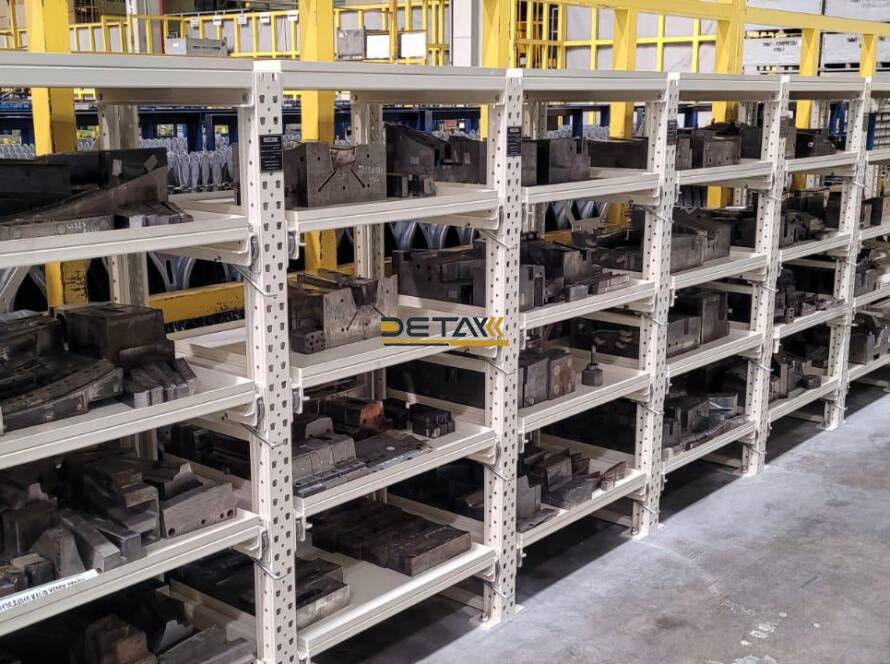
For small parts, shallow and wide drawers beat deep ones every time, because in a deep drawer parts pile on top of each other and whatever sits at the bottom is always forgotten; even workshop examples offer a good reference here, since the drawer equipped models among industrial material cabinets keep the inner drawer height as low as 75 millimeters on some models so that small parts lie in a single layer, always in plain sight 📏. Inside the vehicle, these drawers should be fitted with removable divided trays, cut foam inserts for test instruments and dissipative boxes that safely spread static charge for sensitive items such as SFPs and ONTs, while fiber adapters and pigtails should live in small lidded boxes that keep the dust out. As the Detay Endüstri team explains in its article on achieving professional vehicle organization, preparation and checks become noticeably easier when every item has a clear address, and an empty slot warns you about a missing part before the vehicle even leaves the depot.

4️⃣ Label, color code and set up a two bin stock system
The label on the drawer front is the language of the whole system 🏷️. In the field I have had the best results with color coding: blue labels for fiber materials, yellow for copper and the RJ45 group, red for power and fuses and green for ESD sensitive items let you find the right drawer within seconds, even in a dark apartment basement. For consumables, the two bin kanban system borrowed from production lines works like magic: you set aside two compartments for the same part, switch to the second one when the first runs empty, and refill the empty one at the depot in the evening, so the “we’re out of connectors” surprise becomes a thing of the past 🔁.
5️⃣ Lock it, secure it and light it up
To keep drawers from sliding open while driving, you need automatic latching locks, full extension telescopic rails and solid connections to the vehicle floor; and as the Detay Endüstri Volkswagen Crafter mobile service vehicle build shows, compressor and generator installations can be planned into the same layout when needed, while builds like the Citroen Jumpy mobile service vehicle add aluminum cladding and LED lighting around the cabinets and shelves 💡. For a crew heading out to a fault after dark, LED lighting is not a luxury but a real necessity, because it keeps labels readable and prevents the wrong part from being installed.

🧑🔧 My own experience: the ten minute evening routine
When we set up this system with an infrastructure crew, the biggest change came not from the drawers themselves but from a new habit, as the crew started spending just ten minutes at the end of each working day checking empty slots, straightening trays that had shifted and putting back any dust caps left off. In the first weeks this little routine felt like an unnecessary chore, but a few weeks later we all noticed that trips back to the depot for missing parts had dropped significantly and that the morning departure prep was practically taking care of itself 🙌. A layout planned with Detay Endüstri gives you the physical infrastructure, but what keeps that infrastructure alive is this small discipline repeated every evening.
❤️ Organization Is Really a Form of Respect
Setting the technical side aside for a moment, I have to say that a drawer system does the most good for the technicians themselves, because people who rush to faults in the rain, in the cold and sometimes in the middle of the night slowly lose their love for the job when they also have to deal with the stress of not finding the part they need. An organized vehicle tells the technician “we value you and your work”, gives the customer a reassuring view when the rear doors open in front of their house, and at the end of the day means getting home a little earlier and a little less tired 🏡. This is exactly the spirit behind the vehicles that Detay Endüstri turns into mobile workshops: a van is not just a means of transport but the place where a technician spends the entire working day.
If your fleet includes larger bodies alongside panel vans, the article on shelving and cabinet solutions for trucks and commercial vehicles is a good starting point for understanding how the same modular logic adapts to different vehicle types. The key thing to remember is that using storage space more efficiently does not increase the vehicle’s permitted payload, so factoring the weight of cabinets, drawers and workbenches into the load calculation is one of the topics Detay Endüstri specialists pay particular attention to during the site survey ⚖️.

I would also remind you that experience matters when choosing a manufacturer: more than 50 years of steel goods experience, which started in Istanbul and has continued in Bursa since 1984, brings with it field knowledge gathered across many sectors from roadside assistance and maintenance vehicles to factories, shipyards and hospitals, and Detay Endüstri carries that know how into its vehicle interior projects 🏭.
🎯 Big Respect for Small Parts
Setting up a drawer system for small electronic parts in telecom field vehicles is a process that starts with sorting, draws a zone plan based on frequency of use and weight, fits drawer interiors with divided and ESD protected trays, becomes sustainable through color coded labels and a two bin stock system, and is secured with locked, anchored and well lit modules. When you apply these steps you do not just save minutes; you also protect your fiber connectors from dust, your modules from static electricity and your crew from parts flying around in a crash 🛡️.
If you would like to plan the right layout for your own vehicle or fleet, you can reach out to Detay Endüstri, browse their full range of vehicle equipment and workshop solutions, and share your materials list and daily workflow to get a drawer plan built around your needs. Remember, what sets a great field technician apart is not only knowledge but the ability to find the right part in a single move; what makes that single move possible is a well designed drawer, and a layout built by Detay Endüstri makes that move repeatable every single day 🚐📡✨.