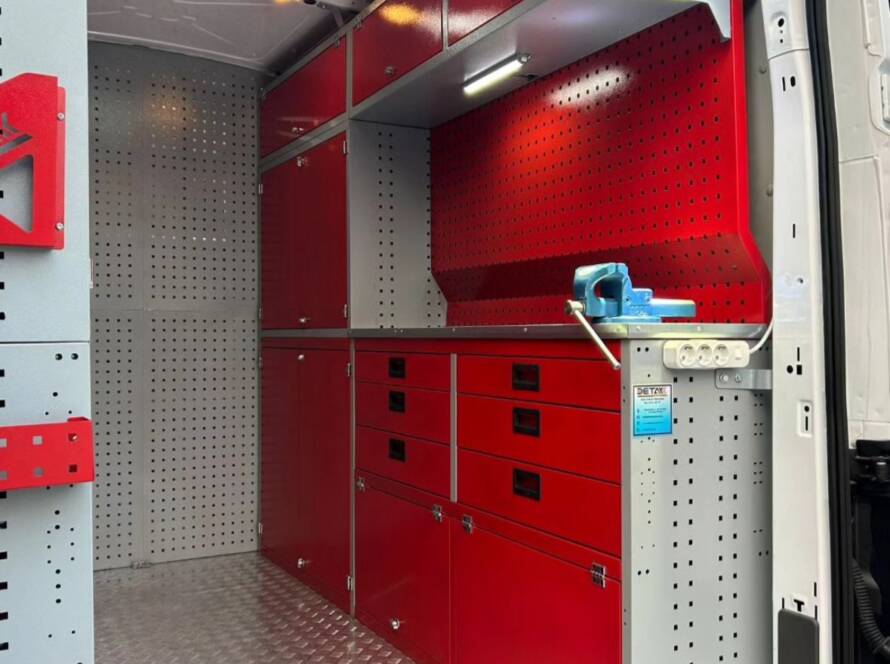
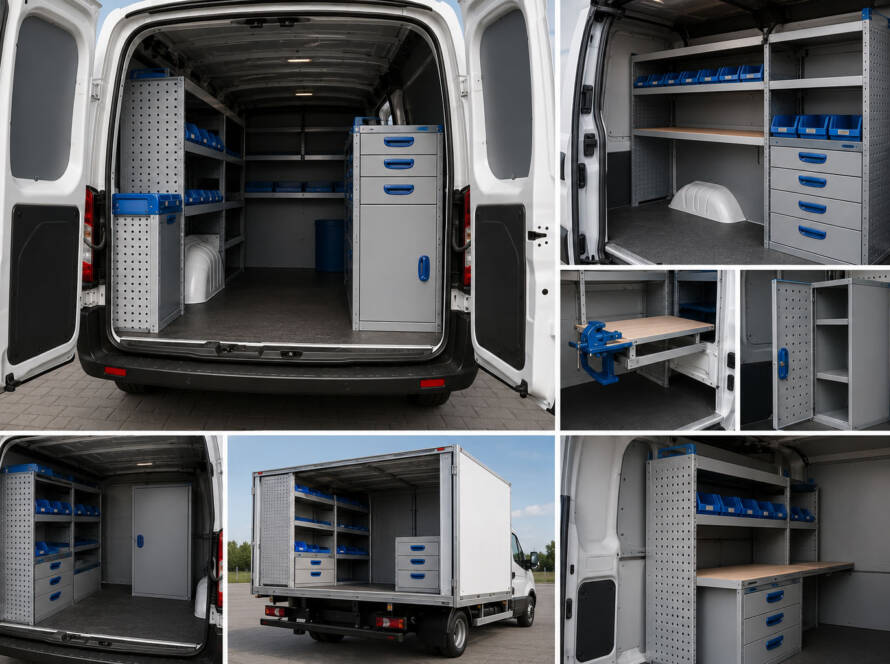
I see this transformation as the quiet digitalization of racking systems 🤝 Because the primary function of a rack is still to carry products safely and systematically; however, technologies such as sensors, RFID tags, electronic locks, digital inventory software, automated guidance, modular connections, and predictive maintenance add a new layer of intelligence around this fundamental role. This is where the approach of manufacturers such as Detay Endüstri, which offer drawer mold racks, light and medium-duty racks, material cabinets, workbenches, and in-vehicle storage solutions together, becomes increasingly important. For new technologies to create real value, not only the electronic components but also the supporting frame, access method, load distribution, and workflow must be planned correctly.
Why Are Industrial Racking Technologies Changing?
There are several main reasons why storage areas are turning toward technology 🙂 Product variety is increasing, delivery times are becoming shorter, more movement is taking place inside warehouses, and the cost of human error is rising. In the past, placing a product on the wrong shelf, failing to record the maintenance status of a mold, loading a heavy drawer unevenly, or being unable to find a critical tool might have been seen as only a delay of a few minutes. Today, however, such small disruptions can cause production lines to stop, orders to be delayed, safety risks to emerge, and traceability to be lost.
For this reason, the rack is no longer only the place where the load is stored; it is also becoming a point where information related to that load is managed. Data such as rack address, product code, weight information, last maintenance date, frequency of use, authorized user, and stock status can be kept within the same system. This digital layer becomes especially important in structures such as drawer mold racks, where heavy and high-value equipment is stored. When the mechanical solutions offered by Detay Endüstri are supported by correct addressing, locking, load classification, and digital tracking systems, the rack can become an active part of the production process.
An Overview of New-Generation Industrial Racking Technologies
| Technology | Main Function | Advantage Provided | Suitable Area of Use |
|---|---|---|---|
| RFID Tracking | Contactless identification of products and equipment | Faster inventory and missing item detection | Tool stores, spare-parts areas, mobile service vehicles |
| IoT Sensors | Collecting load, vibration, temperature, and movement data | Early detection of risks and abnormal use | Heavy-duty racks and sensitive-material storage areas |
| Electronic Locking | Authorized access and usage recording | Security and user traceability | Valuable tools, molds, and sensitive equipment cabinets |
| Digital Labels | Dynamically displaying rack and product information | Faster updates and fewer errors than paper labels | Rapidly changing stock and production supply areas |
| Pick-to-Light Systems | Guiding the user to the correct location with lights | Reduces picking time and incorrect product selection | Order preparation and assembly lines |
| Automated Storage Integration | Working together with robots and transport systems | Faster and more repeatable material movement | High-volume production and distribution facilities |
| Predictive Maintenance | Predicting signs of failure through data | Reduces unplanned downtime and major maintenance costs | Frequently used drawer and mobile racking systems |
| Digital Twin | Creating a virtual model of the rack and warehouse layout | Allows layout and capacity decisions to be tested in advance | Large warehouses and complex production facilities |
How Does RFID Technology Make Racking Systems Smarter?
RFID is one of the technologies that enables products and equipment to be identified without physical contact by using radio frequencies 📡 In traditional barcode systems, the label usually needs to be presented to the reader at a certain angle, while RFID tags can be read without direct line of sight when the correct infrastructure is installed. This provides an important speed advantage, especially in areas containing a large number of tools, spare parts, molds, or service equipment.
When RFID tags are assigned to products in a rack location, it becomes possible to track which rack the item is on, when it was removed, whether it was returned, and in some applications which employee moved it. A similar approach can also be used in roadside assistance and mobile service vehicles. When critical equipment is removed from the vehicle, the system can detect it and create a missing-item alert at the end of the shift. This approach can be especially valuable in areas such as in-vehicle cabinet and shelving systems, where constantly moving equipment must remain organized.
The real benefit of RFID technology is not only reducing inventory counting time 😊 Its main benefit is making the movement history of equipment visible. For example, if a particular tool is repeatedly returned to the wrong compartment, the storage layout can be reviewed. If certain equipment is used much more frequently than others, the maintenance plan can be adjusted according to actual usage data. In this way, when the modular rack and cabinet structures developed by Detay Endüstri are combined with RFID-based tracking infrastructure, they can provide not only organization but also measurable inventory control.
Monitoring Load, Vibration, and Environmental Conditions with IoT Sensors
The Internet of Things, commonly known as IoT, enables physical equipment to generate data through sensors and transfer that data to centralized systems 😊 Sensors used in industrial racks do not change the main function of the rack, but they make the conditions under which it operates visible. Load cells can monitor weight on specific rack levels, motion sensors can record how frequently drawers are opened, vibration sensors can detect unusual mechanical behavior, and temperature and humidity sensors can monitor whether sensitive products are being stored under suitable environmental conditions.
For example, when a heavy drawer approaches its specified load limit, the user can be alerted. If the load is concentrated too heavily on the right or left side, suitable sensor placement may detect this as uneven distribution. If unexpected vibration occurs in the area where the rack is located, a maintenance notification can be generated indicating that the anchoring, floor, or connection points should be inspected. This approach helps ensure that safety-critical issues such as weight distribution in drawer racking systems are not left entirely to user attention.
Of course, adding sensors alone does not create a safe rack. The supporting frame, rail system, connection points, and floor anchoring must still be designed correctly. Technology does not replace mechanical engineering; it supports it. For this reason, planning the sensor infrastructure together with manufacturers such as Detay Endüstri, which consider load capacity and real field use, produces much healthier results.
Smart Locks and Authorized Access Systems
One of the most visible developments in industrial rack and cabinet technology is electronic locking systems 🔒 Traditional keyed locks provide physical protection, but it is often impossible to record who has the key, when the cabinet was opened, and which equipment was taken by whom. Electronic locks allow access to be controlled through cards, employee IDs, passwords, or centralized authorization systems.
This technology is especially important in areas containing expensive measuring devices, specialized tool sets, critical spare parts, and production molds. When an authorized employee opens the cabinet, the transaction can be recorded. If the cabinet remains open at the end of the shift, an alert can be generated. Access to specific equipment can be limited to trained personnel. In this way, security depends not only on locking the door, but also on monitoring the entire usage process.
When material cabinets, tool cabinets, and drawer systems are supported by electronic locking infrastructure, a stronger chain of accountability can be established inside the business. In facilities operating multiple shifts, being able to answer the question “who used this equipment last?” provides a major advantage in terms of time and cost.
Digital Shelf Labels and Dynamic Addressing
Although paper labels have been one of the basic tools of warehouse organization for many years, they can create update difficulties in rapidly changing stock environments 🏷️ When a product location changes, the old label must be removed, a new one printed, and the replacement attached to the correct position. If this is not done properly, physical stock and system records may become inconsistent. Digital shelf labels allow information such as product code, stock quantity, order priority, batch information, or maintenance status to be updated centrally.
For example, when the product stored in a rack location behind a production line changes, the digital label can automatically switch to the new product information. A visual or colored warning may appear when stock reaches a critical level. Molds waiting for maintenance, molds ready for use, and molds currently in production can be separated through different status indicators. In this way, the label stops being a fixed sign showing only the rack address and becomes a small information screen communicating the current operational status.
This technology is especially valuable in modular racking systems. When rack levels and compartments are rearranged, a new address can be assigned through the system instead of preparing new physical labels. In systems such as light and medium-duty racks, which can be adjusted for products of different dimensions, digital addressing strengthens the operational value of modularity.
Pick-to-Light and Put-to-Light Systems
Pick-to-Light is a technology that guides employees to the correct rack location with illuminated indicators during product picking 💡 When an order or work instruction enters the system, a light turns on at the relevant rack position and, in some applications, a display shows the quantity that should be picked. After taking the item, the employee presses a button to confirm completion. Put-to-Light uses the same logic in the opposite direction and shows the user where the product should be placed.
These systems are particularly useful on assembly lines, in spare-parts warehouses, and in order preparation areas containing large numbers of small parts. Because employees do not need to read lists and search for rack codes, process time can be reduced. The risk of selecting the wrong product or quantity may also decrease. New employees can adapt to the process more easily.
I see Pick-to-Light as the rack communicating with the user 😊 Without using words, the rack says through light, “the part you are looking for is here.” However, for this technology to be useful, rack locations must be ergonomically arranged, products must be correctly classified, and illuminated modules must remain within the user’s field of vision. Electronic guidance alone cannot correct a poorly planned physical layout. The physical flow should be established first, followed by digital guidance.
Integration with Robots and Automated Material-Handling Systems
Autonomous mobile robots, conveyors, and automated guided vehicles are reshaping material movement within storage facilities 🤖 In traditional layouts, employees remove products from racks and carry them to production or shipping points. In automated environments, a robot travels to the designated rack or station, receives the product, and transports it along a programmed route. These systems can provide significant advantages in repetitive, long-distance, and predictable material movements.
For a racking system to work with robots, lower clearances, delivery points, aisle dimensions, and product pickup heights must be planned from the beginning. Disorganized boxes left in front of racks, floor obstacles, or non-standard product positions can disrupt robot movement. Therefore, an automation-compatible rack is not simply a rack with sensors; it is a racking system whose geometry has been designed for machine access.
In more advanced applications, robots may bring mobile rack units to employees instead of traveling to fixed racks. In this model, employees do not walk through the warehouse; the product comes to them. However, not every business needs full automation. Sometimes a transport robot, a conveyor connection, or a semi-automatic drawer or lifting system is sufficient. The right technology is not the most expensive technology; it is the one that solves the real loss in the workflow.
Compact and Mobile Racking Technologies
Compact racking systems aim to create higher storage density within the same area by reducing the number of aisles. Rack blocks move along rails and an aisle opens only in the section that needs to be accessed. Detay Endüstri’s compact archive system is one example that provides space savings through mechanical movement and central locking logic.
In new-generation applications, these systems can be supported with motorized movement, remote control, safety sensors, and automatic aisle-opening features. The user selects the required rack block through the system, the relevant aisle opens automatically, and sensors check whether a person or obstacle is present within the movement area. In this way, high space efficiency is combined with more controlled operation.
However, when planning compact systems, factors such as earthquake conditions, floor levelness, rail alignment, load distribution, emergency exits, and daily access intensity must be carefully evaluated. Keeping frequently used products in the most passive areas of moving blocks may increase process time. Therefore, the technology should be used together with correct product classification, not only to increase capacity.
How Is Predictive Maintenance Applied to Racking Systems?
In traditional maintenance approaches, racks are inspected at set intervals or repaired after a visible problem appears. Predictive maintenance, by contrast, analyzes data from sensors and usage records to estimate the likelihood of failure or wear before the problem becomes serious 🔧 For example, if a drawer requires more force than normal to open, vibration values gradually increase, or the same rail is repeatedly exposed to unbalanced loading, the system can generate an early maintenance alert.
This approach is particularly valuable in heavy drawers that are opened and closed frequently. A small rail misalignment may initially create only minor friction, but as use continues, the connections, frame, and slide system may become increasingly strained. Performing maintenance before the problem grows can improve safety and prevent larger component replacements.
In moving structures such as 65% extension drawer mold racks and full-extension heavy-duty systems, digitally recording the number of openings, load quantity, and maintenance history may become more common in the future. This will allow maintenance to be scheduled according to real usage behavior rather than only according to the calendar.
Digital Twins and Warehouse Simulation
A digital twin is a virtual representation of a physical system 🖥️ When this approach is applied to industrial racks and warehouse layouts, rack dimensions, carrying capacities, aisles, product movements, employee routes, and equipment access can be studied within a digital model. Before a new rack is added, simulations can evaluate whether the aisle will become too narrow, whether crane access will be affected, or how product picking time will change.
For example, imagine that a new drawer rack will be installed in a mold room. In the digital model, the rack’s extension distance, crane movement, transition to the workbench, and safe walking space can all be tested together. This allows conflicts that would otherwise be discovered only after installation to be identified during the project stage. As a result, both revision costs and installation time may be reduced.
Digital twin technology should not be considered only for large and fully automated warehouses. Even simpler three-dimensional layout models can provide important decision support for small and medium-sized businesses. Sharing dimensions, access requirements, and product movements with a project-based manufacturer such as Detay Endüstri can provide the foundation for such digital planning studies.
Augmented Reality for Maintenance and Product Location
Augmented reality technologies add a digital guidance and information layer over the physical environment 👓 When employees look at a storage area through a phone, tablet, or suitable headset, they can see the rack containing the product they are searching for, the route they should follow, or the maintenance steps that need to be completed. This approach can make it easier to guide new employees in large and complex storage areas.
On the maintenance side, technicians can scan a label on the rack to display connection inspection points, previous maintenance records, or relevant technical documents. In a drawer system, the technology can visually show which rails need lubrication, which connections should be checked, and when the next maintenance date is due. Although this technology may not yet be widespread in every business, it has strong potential in training, maintenance standardization, and rapid product location.
Is Modularity Also a Technology?
When new technology is mentioned, people often think only of sensors, screens, and software; however, modern mechanical design is also an important technology field 😊 Modular racking systems allow businesses to reorganize their storage without replacing the entire structure, thanks to connection systems that can adapt to changing product dimensions and capacity requirements. Rack levels can be changed, new drawers can be added, cabinet modules can be relocated, or workstations can be rebuilt in a different configuration.
This approach is valuable both economically and environmentally. When production changes, only the required module is updated instead of discarding the entire rack. Modularity also makes it easier to add sensors, digital labels, or locking systems later. For this reason, the modular systems approach creates the physical infrastructure required for digital transformation.
I compare this to the electrical infrastructure of a building 🤝 The walls may be strong, but if the infrastructure is not suitable for adding new devices in the future, every change becomes difficult. The same applies to racking systems. The frame must be strong, but it should also be flexible enough to allow new accessories, sensors, locks, or guidance systems to be added. From this perspective, the modular product families offered by Detay Endüstri can provide an important foundation for adapting to future technological developments.

How Do New Technologies Improve Safety?
One of the most valuable developments in industrial racking technology is making safety data visible 🔒 Capacity sensors can warn against overloading, illuminated indicators can reduce products being placed in the wrong location, electronic locks can restrict unauthorized access, motion sensors can stop compact racking systems when a person is inside the aisle, and maintenance software can notify managers about overdue inspections.
However, it would be wrong to ignore fundamental safety rules by relying too heavily on technology. Racks must still be anchored correctly to the floor, manufacturer capacities must not be exceeded, heavy loads must be distributed evenly, damaged parts must be replaced, and regular visual inspections must be performed. User training does not become unnecessary simply because sensors provide warnings. Mechanical lock quality does not become unimportant because an electronic lock is installed. A good system combines mechanical safety with digital control.
Main Advantages New Technologies Provide to Businesses
| Advantage | Operational Impact |
|---|---|
| Higher stock accuracy | Missing, misplaced, or in-use products are identified more quickly. |
| Shorter product location time | Digital labels and illuminated guidance direct employees to the correct point. |
| More controlled access | Electronic locks and user records protect valuable equipment. |
| Improved maintenance planning | Usage and vibration data can reveal maintenance needs early. |
| Fewer human errors | Picking, placement, and counting processes are supported by digital verification. |
| Stronger traceability | Product and equipment movements can be recorded. |
| Easier scalability | Modular structures can adapt to changing production and stock requirements. |
| Safer operation | Overloading, unauthorized access, and uncontrolled movement risks can be reduced. |
An Example Smart Racking Application
Let us say that an automotive supplier stores a large number of molds, measuring devices, tool sets, and spare parts 👍 Main molds are kept in heavy-duty drawer racks. Each mold is assigned an RFID tag and its rack address is matched with the production software. Load sensors inside the drawers issue alerts when specified capacities are exceeded. An illuminated indicator turns on at the rack position of the mold scheduled for active production. Molds waiting for maintenance are shown with a different status indicator on the digital label. Material cabinets containing measuring devices are opened with card-based access, and usage records are stored.
When a mold approaches its scheduled maintenance period, the system sends a notification to the maintenance team. If abnormal vibration or increased movement resistance is detected on a drawer rail, a technical inspection task is created. When a mold is removed from the rack, the inventory status is updated automatically, and the production manager can see on the screen where each piece of equipment is located. Such a structure transforms the racking system from a simple storage area into a data-generating part of production management.
Technology Revealed the Hidden Process Problem
In one company, it was believed that spare tools were constantly disappearing 😊 When an RFID-based tracking trial was introduced, it became clear that the tools were not actually being lost; most were taken to the maintenance area and then returned to different racks. The problem was not employee misconduct or insufficient stock, but an undefined return process. Rack addresses were reorganized, illuminated guidance was added, and a separate zone was created for returned maintenance equipment. A much more controlled system emerged with the same number of tools. This example shows me that technology does not always solve the problem directly, but it can make the true location of the problem visible.
Smart Systems Reduce Uncertainty
Industrial technology is not only about numbers and screens 💙 When employees know where a piece of equipment is, they work more calmly. When the maintenance manager can see which rack needs inspection, the work can be planned more effectively. When management trusts the inventory data, there is less need to request constant manual counts. In other words, good technology reduces the burden of uncertainty on people.
Of course, technology should not be used merely to monitor employees or make processes more complicated. The system should help the user, reduce search time, and support safety. A system that generates unnecessary notifications, is difficult to use, or does not fit the real workflow may quickly be abandoned. The best technology is the kind that employees barely notice but that allows the work to progress in a more organized way.
A Simple Diagram Related to the Topic
PHYSICAL RACK INFRASTRUCTURE
Strong frame + correct capacity + balanced load + safe connection
      ↓
DIGITAL TECHNOLOGY
RFID + sensor + digital label + electronic lock
      ↓
SMART GUIDANCE
Pick-to-Light + software integration + automated notification
      ↓
DATA ANALYSIS
Stock movement + frequency of use + maintenance need + safety warning
      ↓
RESULT
Faster access + fewer errors + safer and more traceable warehouse
Frequently Asked Questions
1. What is a smart industrial racking system?
It is a racking system that generates stock and usage data through technologies such as sensors, RFID, digital labels, electronic locks, or software connections.
2. What is the main difference between RFID and barcodes?
Barcodes generally require direct line of sight and individual scanning, while RFID can provide faster and contactless identification with suitable infrastructure.
3. Are weight sensors used in racking systems?
Yes. In suitable systems, weight sensors can be used to monitor load levels or detect when capacity limits are being approached.
4. What does a Pick-to-Light system do?
It guides employees to the correct rack location with an illuminated indicator, helping reduce product picking time and error risk.
5. Are electronic locks safer than mechanical locks?
Electronic locks provide authorization and recording advantages, but they should be used together with a strong mechanical structure and an emergency access plan.
6. Can sensors be added to existing racks later?
They can be added to some racks, but the frame structure, power connection, data communication, and sensor mounting points should be reviewed first.
7. What information can a digital shelf label display?
It can display product codes, quantities, rack addresses, batch information, maintenance status, order priority, and similar data.
8. Are smart racks suitable for small businesses?
Yes. Instead of automating the entire system, a business can begin with the technology that provides the greatest benefit, such as RFID, digital labels, or electronic locking.
9. Does predictive maintenance really work in racking systems?
In frequently used moving and drawer systems, data such as vibration, number of openings, and movement resistance can support early maintenance decisions.
10. What is the most important criterion when selecting a new technology?
The technology should solve a real operational problem, be compatible with the existing racking infrastructure, and be easy for employees to use.
People Also Ask
- How are RFID tags used on metal racks?
- What data can IoT sensors measure in industrial racking systems?
- Do smart racking systems reduce inventory errors?
- How does Pick-to-Light work on assembly lines?
- Who should use electronically locked tool cabinets?
- Can digital shelf labels be connected to ERP systems?
- Can autonomous robots work with existing warehouse racks?
- What is the purpose of a digital twin in racking systems?
- How is predictive maintenance applied to drawer racks?
- Which infrastructure should be checked before investing in smart racks?
Conclusion
To sum it up 😊 The new technologies used in industrial racking systems do not eliminate the rack’s basic load-carrying function; instead, they make that function more visible, controlled, and measurable. RFID systems help track product movements, IoT sensors monitor load and operating conditions, electronic locks provide authorized access, digital labels display current information, illuminated guidance systems help employees find the correct product quickly, and predictive maintenance applications help identify problems before they become more serious.
My clear opinion is this 👍 Businesses should not begin technology selection by asking, “Which system is the newest?” They should begin by asking, “Which problem do we need to solve?” If product location takes too long, RFID or illuminated guidance may be the right starting point. If unauthorized access is a problem, electronic locking may be more suitable. If heavy-load control is required, sensors may provide value. If product addresses change frequently, digital labels may be the most appropriate choice. All of these solutions gain meaning when combined with a strong, modular, and correctly designed physical racking infrastructure.
For this reason, it is important to perform a needs analysis at the beginning of the project with manufacturers such as Detay Endüstri, which develop drawer mold racks, workbenches, tool cabinets, and racking systems for different load classes. When rack dimensions, load types, access frequency, employee movements, and digital technologies planned for the future are evaluated together, a more sustainable infrastructure can be established.
When contacting Detay Endüstri, sharing the types of products to be stored, approximate weights, daily movement counts, existing software systems, and expectations regarding sensors or digital tracking will make the project process healthier. In this way, it becomes possible to plan a racking system that not only carries today’s loads but can also adapt to future automation and traceability requirements.
And perhaps the most important point is this 💙 It is no longer enough to know where the rack is; it is also necessary to know the status of the product inside it, the safety condition of the system, and the maintenance requirement. If warehouse employees find products more quickly, the maintenance team detects problems before they grow, and management can trust the stock data, then the technology is creating real value. The future of new-generation industrial racking systems is taking shape precisely through this balanced combination of mechanical strength and digital intelligence.