Why Durability Is Not Just About Thick Sheet Metal
When people talk about durability in industrial shelving, many immediately think only of thick steel or heavier-looking components; however, in real operational life, the picture is much broader 😊 Yes, material thickness matters, but for a shelving system to remain reliable over the long term, factors such as yield strength, profile geometry, connection quality, coating type, scratch and impact response, environmental humidity, chemical exposure, cleaning frequency, load distribution, and installation quality must all be evaluated together. That is precisely why saying “it should just be steel and that is enough” is usually an incomplete decision for a serious business. For example, in a dry and controlled indoor environment, powder-coated steel shelving can be an excellent and efficient solution, while in humid washing zones or areas exposed to aggressive chemical vapors, stainless steel may be a much more accurate choice. In the same way, in in-vehicle applications where lightness becomes a priority, aluminum can offer valuable benefits in certain components.
Another important point is that shelving should never be evaluated in complete isolation. Shelving is part of a broader storage infrastructure, and in many facilities it works alongside Light and Medium Duty Racks, Mezzanine Shelving Systems, Material Cabinets, and Work Benches. In other words, when you choose the metal used in shelving, you are not simply selecting a standalone structure, but shaping a workstation ecosystem that affects the entire flow of work.
The Most Common Metal Types Used in Industrial Shelving
Now let us come to the main question 🙂 The most common metals used in industrial shelving are generally painted carbon steel, galvanized steel, stainless steel, and, in certain applications, aluminum. Each one of these materials is strong, but none of them performs exactly the same way under every condition. This is also why solution-driven manufacturers such as Detay Endüstri offer different product groups, because not every shelving system is designed for the same environment or the same operational priorities.
| Metal Type | Main Advantage | Point to Watch | Best Use Area |
|---|---|---|---|
| Carbon Steel | High load capacity, cost efficiency, broad manufacturing flexibility | Rust risk increases if surface protection is weak | Dry warehouses, workshops, general production areas |
| Galvanized Steel | Stronger surface protection against corrosion | Coating damage and aggressive chemicals still require attention | Humid spaces, semi-open areas, service vehicles |
| Stainless Steel | Excellent corrosion resistance, hygiene, and easy cleaning | Higher initial investment cost | Food, pharmaceutical, hygienic and wet environments |
| Aluminum | Light weight, good corrosion resistance, portability | May not be as rigid as steel under heavy structural loads | Mobile systems, support modules, vehicle interiors |
1) Carbon Steel Shelving: The Traditional Backbone of Strength
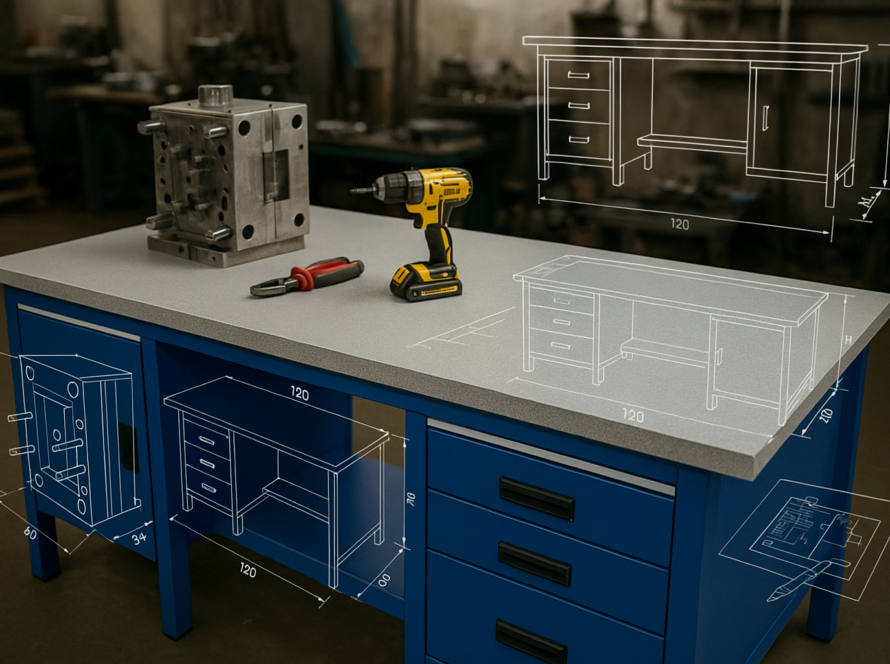
Carbon steel is the classic player in the world of industrial shelving 💪 The reason is very simple: it combines high strength, cost efficiency, and production flexibility. In dry and controlled environments, shelving made from powder-coated carbon steel can perform exceptionally well. When high carrying capacity is needed, especially when combined with the right profile geometry and beam design, it creates a very dependable structural backbone. That is why it is widely used in workshops, spare parts rooms, assembly zones, and general storage spaces. In modular storage layouts, it can also work effectively alongside engineered systems such as a Mold Rack With Drawer, where orderly storage and accessibility matter as much as strength.
The vulnerable side of carbon steel, of course, is corrosion. If the surface protection is poor or the coating is damaged, rust can begin to develop, especially in humid conditions. This means a shelving unit that performs beautifully in a dry indoor setting may lose performance surprisingly quickly if placed in the wrong environment. I often explain carbon steel with a simple metaphor 😊 It is like a very strong athlete; in the right conditions it performs brilliantly, but if you keep it under constant rain, maintaining that performance becomes much more difficult.
2) Galvanized Steel Shelving: A Balanced Choice Against Moisture
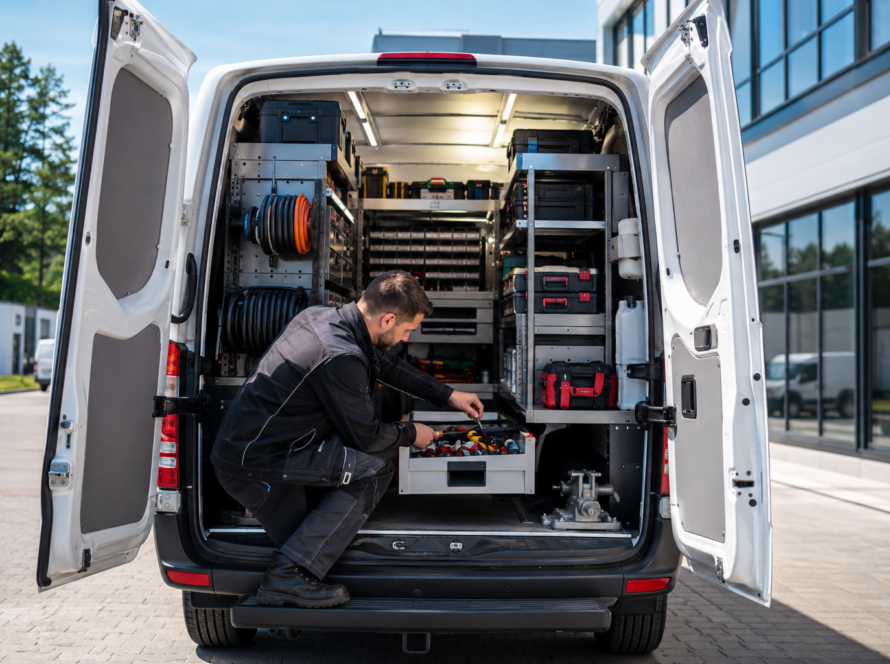
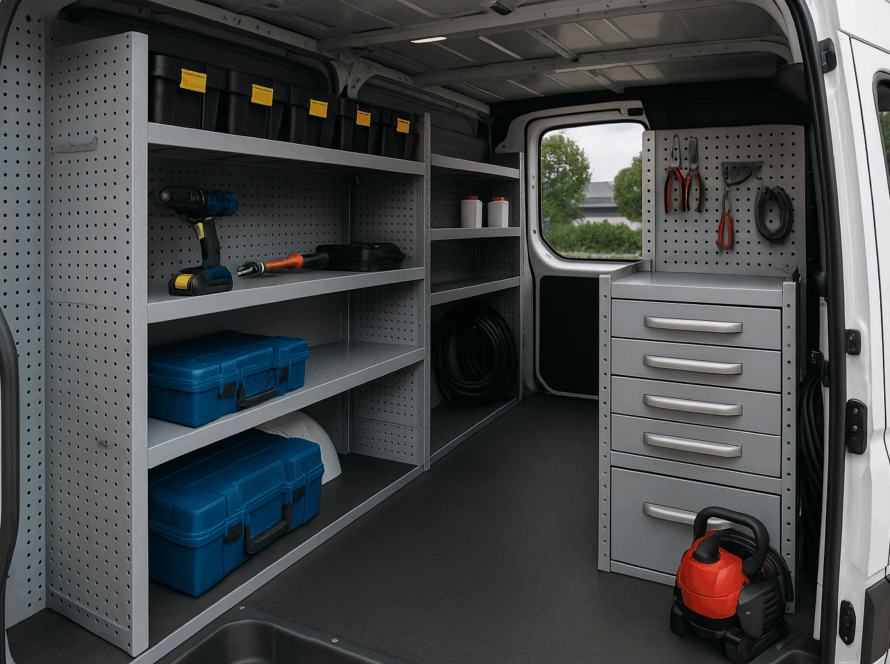
Galvanized steel preserves the structural advantages of steel while adding an extra layer of corrosion resistance through zinc coating. This makes it especially useful in areas where humidity rises periodically, where there is some level of outdoor exposure, or where mobile service conditions create a more demanding environment. In scenarios related to mobile workshops and in-vehicle storage, galvanized structures can provide a meaningful balance between durability and environmental resistance. This is why systems such as Car Cabinet and Shelf Systems are often part of the conversation when discussing practical durability in the field.
The beauty of galvanized steel is that it gives you the confidence of steel while delivering noticeably better resistance to corrosion than unprotected carbon steel 🙌 For companies that say, “I want stronger surface protection without immediately moving to full stainless steel,” galvanized steel often becomes the middle ground that makes the most sense. In loading zones, semi-open work areas, and fluctuating environmental conditions, it can be a particularly rational solution.
3) Stainless Steel Shelving: The Champion of Hygiene and Corrosion Resistance
Stainless steel becomes the star of the discussion when moisture, hygiene, washability, and corrosion resistance are critical ✨ Its key advantage comes from the passive oxide layer formed through sufficient chromium content, which helps protect the surface over time. This is why stainless steel shelving stands out in food production, pharmaceutical environments, laboratories, healthcare facilities, and high-hygiene work areas. There is also an important nuance here: not all stainless steels are the same. Grade 304 is highly effective for many standard indoor industrial applications, while environments with stronger chloride exposure or more aggressive chemicals may benefit from higher-performing options such as 316.
Its upfront investment cost is certainly higher, but in many facilities the long-term benefits in maintenance, cleanliness, appearance, and service life justify that difference. I always think of stainless steel as the calm but extremely disciplined colleague 😊 It may seem more expensive at the beginning, but the chance of it letting you down later is much lower.
4) Aluminum Components in Shelving: The Advantage of Lightness and Mobility
Aluminum is not always the main structural body of a shelving system, but in mobile applications, support modules, in-vehicle storage, and layouts where reducing weight matters, it becomes highly valuable 🚐 Because it is light, it makes transportation, installation, and reconfiguration easier. It also provides good corrosion resistance thanks to its natural oxide layer. That is why aluminum is often used strategically in selected modules or hybrid systems. In service vehicle operations where weight management is a real concern, it can work well together with mobile solutions such as Tool Trolleys and other portable storage concepts.
That said, it is important to be honest 🙂 In very heavy-duty primary load-bearing systems, expecting aluminum to behave exactly like steel would not be realistic. So the real question is not whether aluminum is “better” than steel, but whether it fits the load profile and mobility demands of the specific operation more intelligently.

What Actually Determines Durability?
Now let us come to the most important part 🙂 Most people focus only on the metal type, but the real durability of shelving is usually hidden in the answers to five very practical questions: How humid is the environment? How heavy is the load? How high is the risk of impact? How often is the surface cleaned? And is the system fixed or mobile? Without answering these questions honestly, material selection often remains incomplete. For example, powder-coated carbon steel may be highly rational for a dry spare parts warehouse, while galvanized steel or hybrid solutions may perform better inside a service vehicle where doors open constantly, temperature changes frequently, and tools regularly shift during transport.
That is why, when I look at the product ecosystem of Detay Endüstri, I prefer not to read just one product page, but the entire system logic. Because shelving often reveals its true value not in isolation, but when considered together with solutions such as a Mold Rack with Drawer 100% Expanding, a Mold Shelf with 65% Opening Drawer, and Computer Cabinets. In other words, choosing the right metal is not only about static strength; it is also about ergonomics, accessibility, workflow speed, equipment protection, and operational continuity.
Example Scenario
Let us imagine a maintenance and repair company with three different areas: a dry spare parts room, a semi-open loading zone, and field service vehicles. In the dry storage room, powder-coated carbon steel shelving may provide excellent value. In the semi-open loading area, galvanized steel becomes a smarter choice. Inside the service vehicle, high-strength steel or galvanized systems may be preferred for the main structure, while aluminum components can be introduced in selected modules to reduce weight. In the same company, insisting on a single metal type everywhere would be less efficient than building a tailored metal strategy according to each working zone 👍
A Short Anecdote
Years ago, I saw a workshop using shelving that looked premium and well-built, yet the surfaces started deteriorating far earlier than expected. The shelving itself was not “bad”; the real issue was that the chosen metal simply did not match the environment. That experience taught me a lesson I still remember very clearly 😊 Durability does not simply mean “a strong material”; it means “a material that remains strong in the right place.”
A Personal Observation
Whenever I evaluate shelving or industrial storage systems, I always pay close attention to one detail: is the business choosing for today only, or is it thinking about how the operation will evolve three years from now? Because modularity, reconfiguration, expansion, relocation, and adaptation are almost as important as metal strength. In this sense, the modular philosophy visible in Detay Endüstri solutions is important, because it combines durability with operational flexibility.
A Simple Diagram for the Topic
ENVIRONMENTAL CONDITIONS
      ↓
Humidity / Chemicals / Impact / Temperature
      ↓
METAL SELECTION
Carbon Steel / Galvanized Steel / Stainless Steel / Aluminum
      ↓
SURFACE PROTECTION
Powder Coating / Galvanizing / Passive Film / Natural Oxide Layer
      ↓
OPERATIONAL RESULT
Load Capacity + Lifespan + Maintenance Need + Safety
Which Metal Makes More Sense for Which Shelving Scenario?
If you are dealing with classic indoor storage in a dry warehouse, carbon steel is often the most rational and cost-effective choice. If the environment involves humidity, occasional water exposure, or partly open working conditions, galvanized steel usually offers a safer balance. If hygiene, frequent cleaning, and corrosion resistance are mission critical, stainless steel becomes far more attractive. If lightness, mobility, and portability are central to the project, aluminum or aluminum-supported hybrid designs deserve serious attention. So when looking at solutions from Detay Endüstri, it makes much more sense to ask, “Which metal is the most durable in my real environment?” instead of simply asking, “Which metal is the strongest?”
There is also an emotional side to this topic 🙂 In many facilities, the feeling of order, confidence, and control often comes from a well-designed storage infrastructure. A drawer that slides properly, a shelf that does not bend, a surface that does not rust, a spare part that can be found in seconds instead of minutes… these may seem like small things, but in daily work life they create a very real sense of calm and competence. That is why choosing the right shelf metal is not only a technical decision, but also one that influences morale, workflow comfort, and team efficiency.
Detailed Selection Criteria
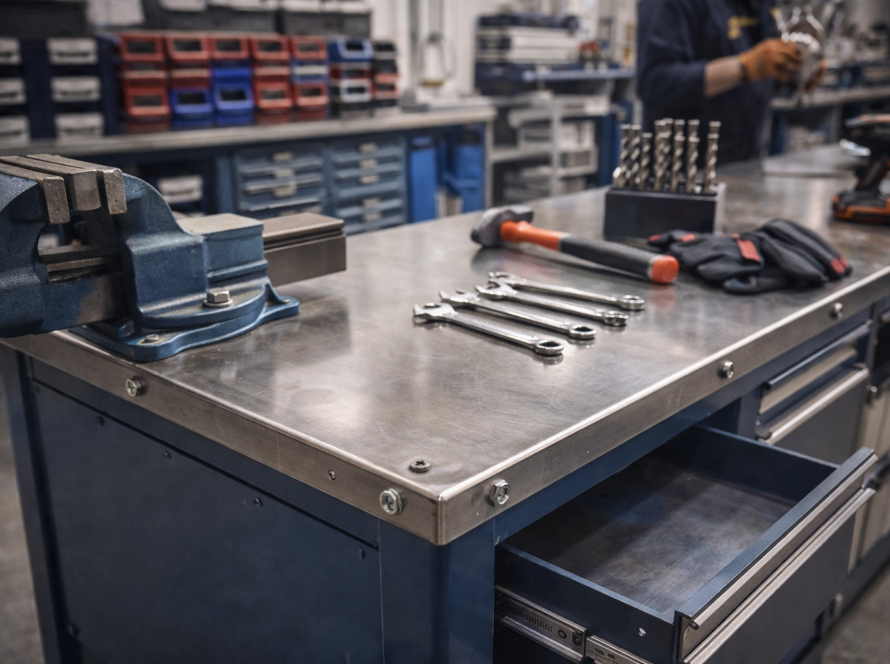
Load intensity: In shelving that must carry heavy and continuous loads, steel structures are often indispensable. Environmental humidity: As humidity rises, galvanized and stainless surfaces become more meaningful. Cleaning routine: In environments with frequent washing or aggressive cleaning, stainless steel stands out strongly. Impact risk: If there is contact with forklifts, pallet trucks, or field equipment, profile strength and surface protection both matter. Mobile use: In vehicles, field operations, and portable setups, overall weight management must be considered carefully. That is why the value of a manufacturer such as Detay Endüstri is not just in offering products, but in understanding how those products behave in real-life operational settings.
Frequently Asked Questions
1. What is the most durable metal for industrial shelving?
There is no single answer. Steel is excellent for heavy loads, stainless steel is stronger in wet and hygienic environments, and aluminum offers strategic value where weight reduction matters.
2. Which lasts longer, galvanized steel or painted steel?
In humid or semi-open environments, galvanized steel often lasts longer. In dry indoor settings, painted steel can still be a very effective and economical solution.
3. Is stainless steel always necessary?
No. It makes perfect sense in food, pharmaceutical, laboratory, healthcare, and high-moisture areas, but not every facility truly requires it.
4. Can aluminum shelving carry heavy loads?
It can, but it should not automatically be expected to behave with the same rigidity as steel in every structural configuration. Application-specific design is essential.
5. Can powder-coated steel rust?
Yes, if the coating is damaged and the environment is humid, corrosion may eventually develop. Maintenance and usage conditions remain important.
6. What is the best metal for in-vehicle shelving?
In many projects, steel or galvanized steel is preferred for the main structure because of safety and durability, while aluminum may be used in selected supporting parts to reduce weight.
7. Which is better in stainless steel, 304 or 316?
If chloride exposure or chemical aggressiveness is higher, 316 can be the better option. For many general indoor industrial applications, 304 is often sufficient.
8. How can shelving lifespan be extended?
Regular cleaning, correct load distribution, minimizing impacts, checking surface damage, and choosing the right metal for the environment are the key steps.
9. Does modularity affect durability?
Yes. A well-designed modular system can improve maintainability, adaptability, and long-term operational efficiency while keeping the structure useful for changing needs.
10. Why is professional guidance important in metal selection?
Because a metal choice that seems cheaper at first can generate hidden costs later through corrosion, replacement, maintenance, and lost efficiency. That is why working with experienced manufacturers such as Detay Endüstri creates a safer and more sustainable result.
People Also Ask
- How can rust formation be prevented in industrial shelving?
- Can galvanized shelving be used outdoors?
- Why is stainless steel shelving more expensive?
- Is aluminum or steel better for vehicle interior storage?
- How is shelf load capacity calculated?
- What happens if powder coating is scratched?
- Which finish is best for humid storage areas?
- Should a mold shop and a spare parts room use the same metal type?
- Which shelving material is best for hygienic production zones?
- What matters more, initial cost or total service life?
Conclusion
To sum it all up 😊 The durability of metals used in industrial shelving is not determined only by the name of the material, but by how well that material matches the working environment. Carbon steel offers an excellent foundation with strong load capacity and economic efficiency. Galvanized steel provides meaningful confidence in humid and field-oriented conditions. Stainless steel becomes indispensable where hygiene and corrosion resistance matter most. Aluminum enters the picture intelligently where mobility and reduced weight are priorities. So there is no single “best metal” in absolute terms; there is only the most suitable metal for your operation.
That is why shelving should not be seen merely as storage equipment, but as a quiet yet essential part of the workflow. In my opinion, the most accurate approach is to choose not according to what looks stronger in theory, but according to how the business actually works every day. If order, safety, durability, and efficiency all matter in your facility, working with solution-oriented manufacturers such as Detay Endüstri provides a real advantage, because the right metal choice does more than carry today’s load; it silently supports tomorrow’s growth as well 💙
And yes, sometimes the professionalism of a business reveals itself not in a glossy presentation, but in a shelf that does not bend, a drawer that closes smoothly, a surface that does not rust, and a storage layout where people can find what they need within seconds 😊 That is exactly why the best way to understand the approach of Detay Endüstri is not only to ask how strong the metal is, but to ask how correctly that metal is applied in the real world.