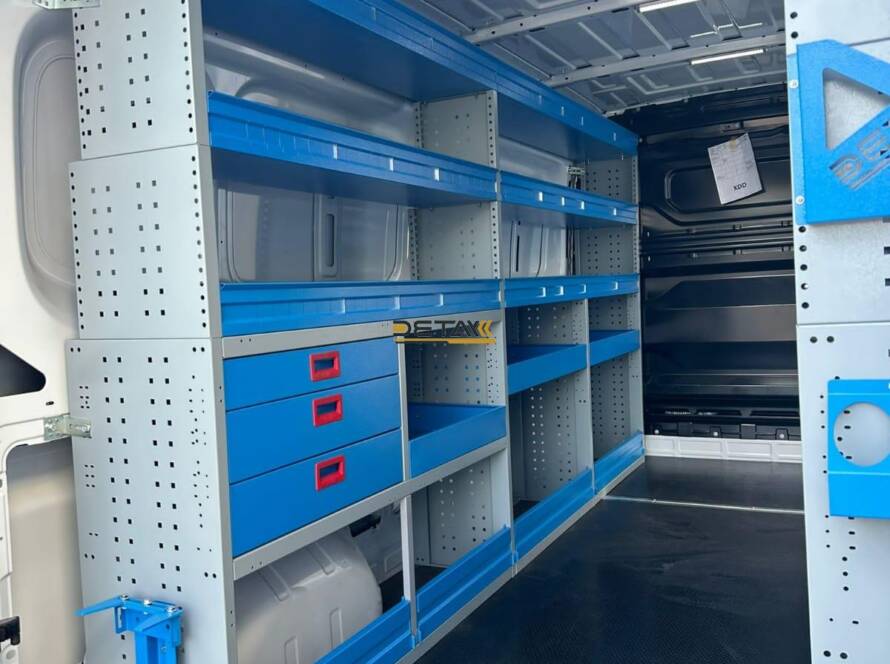
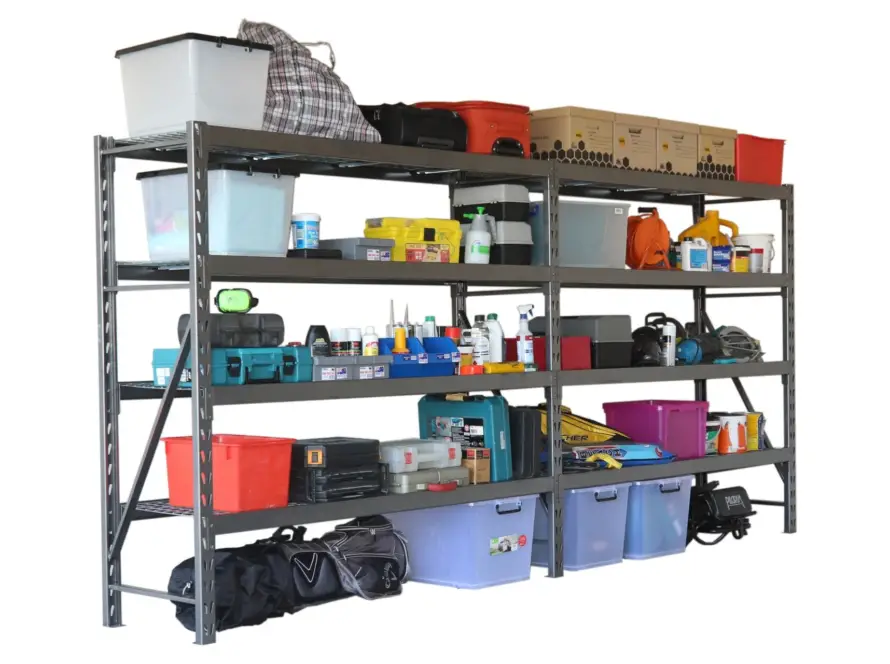
I always like to think of this in the following way 🤝 A drawer rack is not just a fixed box; it is a moving work platform. Every time you open a drawer, the behavior of the load changes. If the product is free to move on the base surface, if the center of gravity shifts, or if the load is concentrated at one point, then the system stops being a simple storage solution and starts becoming a structure that creates mechanical stress. That is why, in manufacturers such as Detay Endüstri, which develop heavy-duty and drawer mold rack solutions, anti-slip systems are not just secondary features; they are direct components of safety and efficiency.
Why Is Sliding Such a Serious Problem?
Sliding in drawer racks is often perceived as a small issue 🙂 In reality, unintended movement of the load inside the drawer is not just an aesthetic or organizational problem. Sliding can apply uneven force to the rails, disrupt the smooth opening behavior of the drawer, cause the product to load one corner more heavily than the others, bring heavy parts closer toward the operator, and increase maintenance needs over time. This risk becomes much more obvious especially with heavy-tonnage molds, dense metal parts, compact but very heavy equipment, or in environments exposed to vibration. For that reason, controlling sliding is one of the core topics both for load management and for mechanical lifespan.
The key point here is not to read sliding simply as “the product moves inside the drawer” 😊 In fact, sliding is the visible face of unbalanced load behavior. If the product is not stable on the base, if the rails are not taking load equally, if the drawer opens abruptly, if surface grip is low, or if locking systems are weak, then this risk grows. That is why, in systems such as drawer mold racks, safety must be considered not only through frame thickness, but together with lock mechanisms that prevent self-opening, proper fastening, and correct loading procedures.
What Are the Main Anti-Slip Systems?
The solutions used to reduce or prevent sliding in drawer racks do not depend on a single technology 🙌 In general, elements that increase surface grip, components that physically limit the movement of the load, mechanisms that control drawer motion, and structural solutions that preserve frame stability all work together. In other words, a good system is not one that only adds an anti-slip surface; it is one that manages sliding from several different points at once.
| System / Technology | Main Function | Advantage | Best Use Case |
|---|---|---|---|
| Anti-Slip Base Coatings | Increase surface grip | Reduce the tendency of products to slide inside the drawer | Small and medium-weight equipment |
| Dividers and Separators | Keep products in fixed sections | Reduce part mixing and lateral shifting | Small parts and multi-item storage |
| Front Barriers and Stoppers | Prevent products from moving forward | Improve safety during drawer extension | Heavy and compact products |
| Automatic / Mechanical Locking Systems | Prevent uncontrolled drawer opening | Reduce movement caused by vibration, transport, or improper use | In-vehicle, mobile, and heavy-duty applications |
| Vibration-Damping Connections | Reduce shock and vibration effects | Lower the risk of sliding and loosening | Mobile or vibration-prone environments |
| Support Plates and Carrying Pads | Spread the load across the base | Reduce point pressure and one-sided shifting | Heavy molds and irregularly shaped products |
1) Anti-Slip Base Coatings: The First Line of Defense
The most basic way to prevent sliding is to increase the grip between the product and the drawer base 😊 That is why anti-slip surface coatings play a very important role in drawer systems. Especially for small hand tools, metal boxes, tool sets, consumables, and medium-density materials, anti-slip coatings significantly reduce unwanted sliding inside the drawer. This prevents the load from piling up in one area during opening or closing, and gives the user a much more controlled feeling of movement.
The important point here is knowing that an anti-slip surface is not a miracle solution on its own 🙂 If the product is extremely heavy, has irregular geometry, or if the drawer is opened abruptly, surface coating alone may not be enough. Even so, it is highly valuable as the base safety layer of the system. There is a reason why anti-slip floor coatings are specifically emphasized as part of safety equipment in Detay Endüstri’s mobile systems and in-vehicle storage logic. The same principle is equally valid for fixed drawer systems.
2) Dividers and Separators: The Quiet Solution That Keeps Parts in Place
Sliding does not always occur with large and heavy parts; sometimes the biggest disorder begins when small parts get mixed together 😌 Screw sets, fasteners, small mold accessories, socket sets, measuring tips, and similar multi-piece contents not only slide when left loose in a drawer, but also mix together. This is where internal drawer dividers and separators come into play. These systems keep parts in their own areas and reduce both lateral movement and part-to-part collision.
I see divider systems as the invisible organizational intelligence of drawer racks 😊 Because the user does not simply drop the product into the drawer; they know where it belongs. This not only prevents sliding, but also reduces search time. Especially in areas where many products are stored together, when used alongside material cabinets and drawer modules, the system becomes far more controlled.
3) Front Barriers and Stoppers: Reducing Risk at the Moment of Opening
In heavy or compact loads, one of the most critical risks is the tendency of the product to move forward when the drawer is opened 🚧 This risk increases especially with products that have smooth bottom surfaces, compact centers of gravity, and limited base contact areas. This is where front barriers, mechanical stoppers, and raised edge limits become very useful. These elements prevent the product from moving freely forward and create much more controlled behavior during extension.
These systems are particularly valuable in drawers carrying heavy molds, tool blocks, or dense single-piece loads. Because even a few centimeters of unwanted movement can change the behavior of the system. For that reason, in solutions such as drawer mold racks, it is not only the placement of the product that matters, but also how it is kept under control during extension.
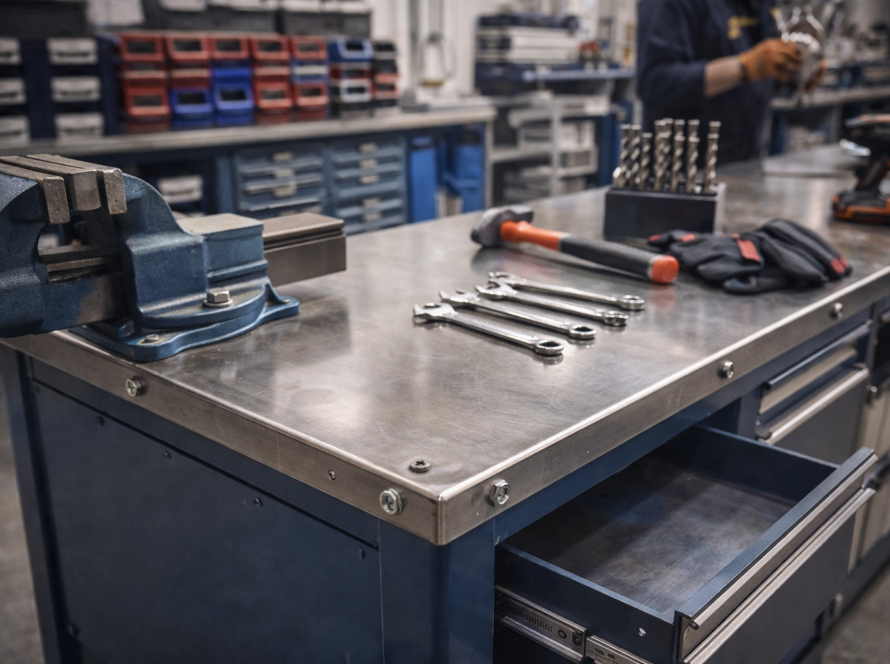
4) Automatic and Mechanical Locking Systems: Controlling Drawer Motion
Preventing sliding does not only mean stopping the product from moving inside the drawer; sometimes it means preventing the drawer itself from moving uncontrollably 🔒 Especially in mobile systems, vibration-prone environments, in-vehicle applications, or intensive use, self-opening drawers can create serious risks. That is why automatic locking drawers, mechanical latch systems, and locking solutions that provide controlled opening are extremely valuable. When the drawer itself remains stable, the likelihood of unintended movement of the load inside also drops significantly.
It is very meaningful that, in Detay Endüstri’s products and blog content, locking mechanisms are specifically emphasized both for safety and for preventing opening caused by driving or vibration. Because if the drawer itself is not stable, even the best anti-slip floor cannot be a complete solution on its own. For this reason, the topic of locking mechanisms should be seen not only as a closing technology, but also as an extension of anti-slip logic.
5) Vibration-Damping Connections and Fastening Logic
Sometimes sliding does not result directly from the placement of the load inside the drawer, but from the environment in which the system operates 🌐 In mobile systems, in-vehicle applications, impact-prone sites, and industrial environments with frequent opening and closing, vibration and shock can cause the load to shift over time. That is why vibration-damping connections, multi-point fastening, frame rigidity, and connection quality are all important parts of anti-slip technologies. When the system absorbs vibration effectively, the load also behaves in a more stable way.
This logic is clearly visible especially in in-vehicle cabinet and rack systems, but the same principle also applies to heavy-duty fixed drawer systems. Because the more rigid and stable the frame is, the lower the chance of unintended movement of the load. I think of this like a building foundation 😊 The stronger the base, the calmer the upper structure behaves.
6) Support Plates, Pads, and Special Slot Designs
Some products naturally tend to slide when placed into a drawer because they do not have flat bottom surfaces. Especially for molds, irregularly shaped metal blocks, rounded parts, or heavy products resting on a single point, a standard base is not enough. In such cases, support plates, carrying pads, recessed cradles, or product-specific slot designs come into play. In this way, the load is controlled not only by friction, but also by physical form compatibility.
In my opinion, this is one of the smartest balancing and anti-slip methods 😊 Because instead of forcing the system onto the product, it creates a carrying surface that takes product behavior into account. Especially in environments working with heavy-tonnage molds, these kinds of solutions make serious contributions to rail lifespan and operator safety. For this reason, in heavy-duty solutions such as the 100% extendable drawer mold rack and the 65% extendable drawer mold rack, the way the product sits on the surface matters just as much as the loading method itself.
What Should Be Done in Practice to Reduce Sliding?
Now let us move to the most practical part 🙌 To prevent sliding in drawer racks, the following applications genuinely make a difference in the field:
| Application | Benefit Provided |
|---|---|
| Using anti-slip base material | Increases surface friction and reduces movement in small and medium loads |
| Placing the load close to the center | Reduces the tendency to move forward or sideways |
| Adding dividers / separators | Prevents parts from colliding and getting mixed together |
| Using a front barrier | Reduces forward slipping during drawer opening |
| Choosing automatic locking drawers | Limits uncontrolled opening and movement caused by vibration |
| Using support plates or custom cradles | Helps irregular products remain stable |
| Performing periodic rail and connection inspections | Allows early detection of deformations caused by sliding |
My personal opinion is this 😊 The best anti-slip system is not one that relies on a single technology, but one that uses several layers of protection together. Because in real life, load behavior does not go wrong for only one reason. Sometimes the base surface is slippery, sometimes the product geometry is poor, sometimes the user places the load incorrectly, and sometimes the drawer is opened too suddenly. That is exactly why the surface, barrier, divider, locking, and fastening logic should all be considered together. A good system cannot eliminate human error entirely, but it can significantly reduce the impact of that error.
Example Scenario
Let us say that a compact but very heavy mold will be stored in a drawer system. If this mold is placed directly onto a flat metal base, even a few centimeters of forward movement when the drawer opens can increase the moment acting on the rails. But if that same mold is stored on a support plate, limited by a front barrier, placed on a surface with improved grip, and kept in a drawer with a controlled locking system, then it behaves much more safely. And if there are small auxiliary parts in the same drawer, they should also be separated with dividers. In other words, even inside a single drawer, multiple anti-slip techniques often work together.
A Short Anecdote
I once saw a drawer in a workshop that seemed to “hit” slightly every time it was opened 😊 At first, people assumed it was a rail failure, but the real issue was that the dense metal part inside was moving forward a few centimeters every time the drawer opened. Once an anti-slip pad and a small front limiter were added, the character of the drawer changed completely. That reminded me once again of something very simple: sometimes what looks like a major problem is actually nothing more than the absence of a small control detail.
There Is an Emotional Side Too: Control Creates a Sense of Confidence
This is not only a mechanical issue 💙 If the user feels that the items inside the drawer will remain stable when they open it, they trust the system more. And that feeling of trust directly affects working speed. By contrast, a drawer in which products shift, make noise, or move forward every time it is opened tires the user, creates hesitation, and causes slower work. In other words, anti-slip systems do not only protect the product; they also improve user comfort.
A Simple Diagram Related to the Topic
LOAD BEHAVIOR
Sliding / Moving forward / Side movement / Displacement due to vibration
      ↓
CAUSE OF RISK
Low surface grip + Unlocked drawer + Unbalanced placement + Vibration
      ↓
SOLUTION LAYERS
Anti-slip base + Divider + Front barrier + Locking system + Fastening + Support plate
      ↓
RESULT
Safer drawer movement + Less rail stress + Better user experience
Frequently Asked Questions
1. Is an anti-slip base sufficient on its own?
It is very useful for small and medium loads, but it may not be sufficient on its own for heavy or irregularly shaped products.
2. Why does the product move forward inside the drawer?
Low surface grip, abrupt opening, forward-biased loading, and product geometry can all cause that behavior.
3. What is the purpose of a front barrier?
It limits the forward movement of the product when the drawer is opened and improves safety.
4. Are dividers only used for organization?
No. Besides keeping order, they also reduce part collision and side movement.
5. How does the locking mechanism affect sliding?
By preventing uncontrolled drawer opening, it also reduces the likelihood of unintended movement of the load inside.
6. Why are vibration-damping connections important?
They reduce shock and vibration effects, which helps limit both connection loosening and load displacement.
7. How should heavy irregularly shaped products be stabilized?
They should be controlled using support plates, custom cradles, recessed surfaces, or physical restraints.
8. Why does a drawer begin making noise over time?
Unbalanced loading, increased friction, rail stress, or internal load movement may all cause that behavior.
9. Does preventing sliding really affect efficiency?
Yes. Smoother opening, fewer breakdowns, and safer use all contribute directly to higher efficiency.
10. What is the most critical safety factor in heavy-duty drawer systems?
The most critical structure is created by the combination of correct loading logic, locking mechanism, fastening, and controlled product positioning.
People Also Ask
- How can product sliding be reduced in a drawer mold rack?
- Do anti-slip surfaces lose effectiveness over time?
- Are locking drawer systems necessary in every industry?
- Are dividers enough for heavy loads?
- Should front barriers and support plates be used together?
- Which drawer system is safer in vibration-prone environments?
- Are custom slots necessary for irregularly shaped products?
- Does side movement inside the drawer affect rail life?
- Do anti-slip systems reduce maintenance cost?
- Which detail increases safety the most in drawer racks?
Conclusion
To sum it up 😊 Anti-slip systems and technologies in drawer racks are not just optional comfort features; they are essential parts of system safety and long-term performance. Anti-slip surfaces reduce movement, dividers improve order and lateral control, front barriers limit forward slipping, locking systems control drawer movement, vibration-damping connections reduce the effects of shock, and support plates stabilize the behavior of heavy products. In other words, a good drawer system does not merely carry the load; it also manages how that load behaves.
My clear opinion is this 👍 If a drawer rack system is going to be truly safe and efficient, the anti-slip issue must be considered from the beginning of the design. A system built without evaluating the type, weight, geometry, frequency of use, and working environment of the product together will remain incomplete. That is why choosing solutions from manufacturers such as Detay Endüstri, who work with full system logic, means not just buying a rack, but building a controlled, safe, and long-lasting usage infrastructure.
And perhaps the most important part of all 💙 A drawer whose internal load remains stable gives confidence to the user. A system that inspires confidence works faster, causes fewer mistakes, and feels more professional. Real efficiency often begins with exactly this invisible sense of control.