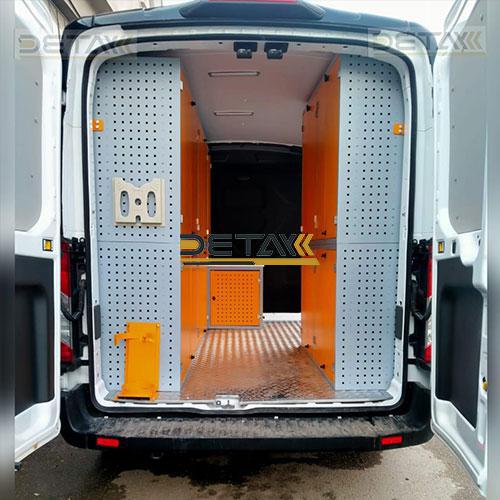
Molds are typically high-cost, heavy, and precision-sensitive equipment. Improper storage or incorrect placement can damage equipment and increase operational risks.
Common problems in poorly organized mold storage areas include:
- Sending the wrong mold to the production line
- Time lost while operators search for molds ⏱️
- Safety risks when removing heavy molds from incorrect positions
- Disruptions in maintenance schedules
- Inaccurate inventory tracking
At this point, labeling does not simply mean writing a name on a tag. Effective labeling should include critical information such as location, weight, maintenance date, and frequency of use.
⚙️ Labeling Systems Used in Mold Racks
1️⃣ Manual Labeling Systems
This is the most basic method, typically using metal or plastic label plates.
Advantages:
- Low cost
- Easy to implement
Disadvantages:
- Difficult to update
- Prone to human error
This method may be sufficient for small workshops but is often inadequate for large-scale production facilities.
2️⃣ Barcode Labeling
Each mold is assigned a unique barcode linked to a digital system.
Benefits:
- Fast scanning and location identification
- Integration with ERP or inventory management systems
- Prevention of incorrect mold usage
This system offers significant time savings, especially in serial production environments 📦
3️⃣ RFID-Based Systems
RFID (Radio Frequency Identification) tags allow molds to be identified remotely without direct scanning.
Advantages:
- Contactless tracking
- Real-time inventory control
- Reduced human intervention
For facilities with high mold circulation and large production volumes, RFID systems are among the most efficient solutions available.
🗂️ Core Organizational Approaches
✔️ Zonal Classification
Molds should be organized based on frequency of use:
- Frequently used molds on lower, easily accessible shelves
- Rarely used molds on upper racks
- Heavy molds stored close to the ground
This method saves time and enhances safety simultaneously.
✔️ Color Coding System
Colors strengthen visual memory and simplify navigation. For example:
- Red: Urgent production molds
- Blue: Standard serial production
- Yellow: Molds under maintenance
This simple system allows operators to locate the correct area within seconds 🚦
✔️ Digital Integration
In advanced manufacturing environments, mold racks are integrated with production planning software. The system tracks each mold’s location, maintenance schedule, and last usage date.
This integration ensures:
- Reduced unplanned downtime
- Systematic maintenance management
- Clear production planning
📊 Operational Impact by Organization Level
| Organization Level | Mold Retrieval Time | Error Risk | Safety Level |
|---|---|---|---|
| Disorganized Storage | High | High | Low |
| Manual Labeling | Medium | Medium | Medium |
| Barcode System | Low | Low | High |
| RFID Integration | Very Low | Minimal | Very High |
As shown in the table, increasing the level of organization directly improves production quality and safety.
🧠 A Short Anecdote: Minutes Can Turn into Hours
In an injection molding facility, the average mold retrieval time was 15 minutes. With 20 mold changes per day, this resulted in 300 minutes of lost time daily. After implementing a barcode system and rack labeling integration, retrieval time dropped to just 3 minutes.
The result? Nearly four hours of net time savings per day — a direct operational and financial gain.
🧭 How Is Functionality Achieved?
To ensure functionality in mold rack systems, the following steps should be taken:
1️⃣ Select rack systems suitable for mold weight
2️⃣ Establish a standardized labeling format
3️⃣ Integrate with a digital inventory management system
4️⃣ Provide operator training
5️⃣ Conduct periodic inspections and updates
These five steps transform mold storage areas from passive storage zones into active operational hubs.
🧩 Conclusion: Organization Determines Production Speed
Labeling and organization systems in mold racks are not merely housekeeping activities; they represent a strategic approach that directly influences production speed, workplace safety, and cost control.
From the Detay Endüstri perspective, a strong rack structure must be supported by an equally strong organizational infrastructure. Because in production, the true difference is often not the machine itself, but the speed of accessing it.
❓ Frequently Asked Questions
1️⃣ Is labeling mandatory in mold rack systems?
Legal requirements vary by industry, but operationally it is highly recommended.
2️⃣ Are RFID systems expensive?
The initial investment may be high, but they provide significant long-term returns.
3️⃣ Does color coding really work?
Yes, especially in high-volume operations where visual guidance is critical.
4️⃣ Is manual labeling sufficient?
It may be adequate for small-scale operations.
5️⃣ Is digital integration necessary?
It is strongly recommended for high-volume production facilities.
6️⃣ Does mold maintenance affect rack organization?
Yes, maintenance information should be integrated into the labeling system.
7️⃣ How is rack capacity determined?
Based on mold weight and safety factors.
8️⃣ How can incorrect mold usage be prevented?
Through barcode or RFID tracking systems.
9️⃣ Should labels be industrial-grade?
Yes, they must withstand harsh industrial environments.
🔟 Does organization truly accelerate production?
Absolutely — it directly reduces intervention and retrieval times.
🤔 People Also Ask
🔹 How should mold rack systems be selected?
🔹 What is the safest storage method for heavy molds?
🔹 How can storage space efficiency be improved?
🔹 Is ERP integration necessary?
🔹 What safety precautions are required in mold rack systems?
🔧 Final Words
Organization and labeling in mold rack systems may seem invisible, but they define the rhythm of production. A properly managed storage area does not only save space — it saves time, enhances safety, and increases efficiency. Because in industry, speed often begins with finding the right mold at the right time 💪